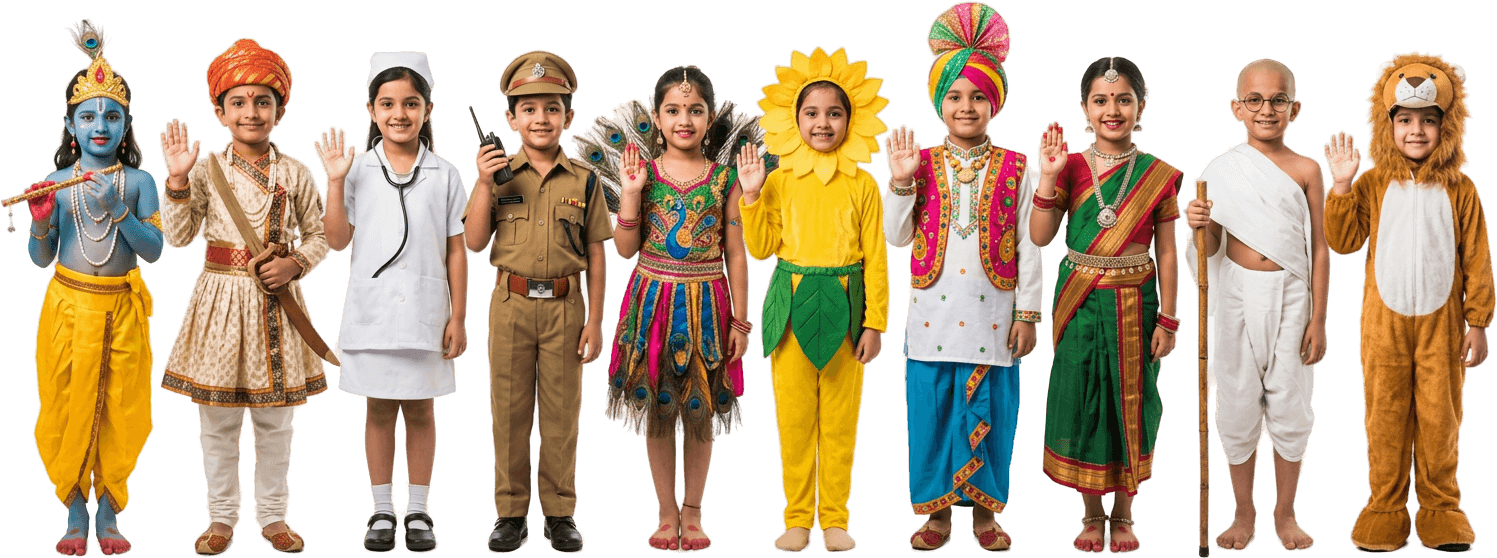
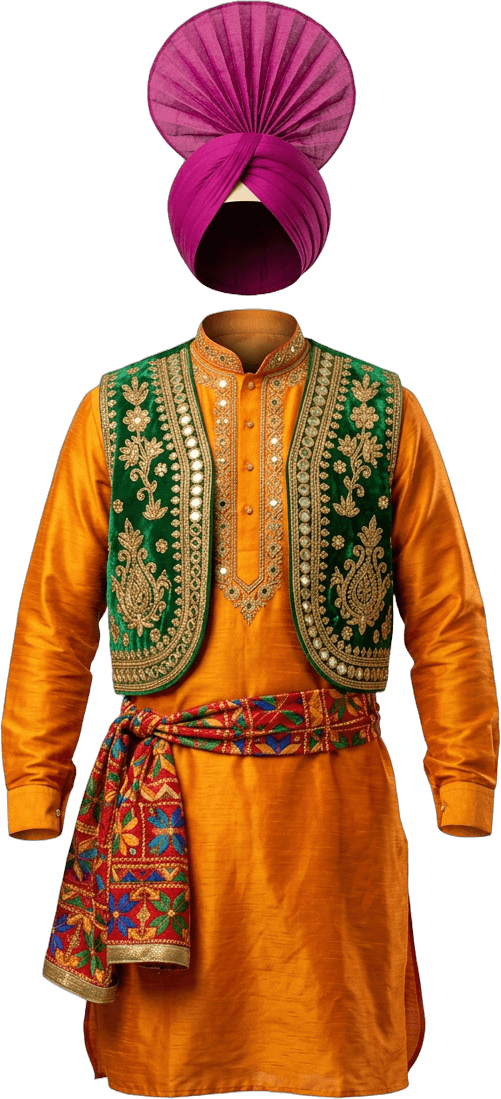
"Unity in diversity" medleys and folk dance competitions are a staple of school programmes. Each region's dress has a signature that the audience recognises; here is what to look for.
Gujarat: Garba and Dandiya
Chaniya choli with a flared, mirror-worked skirt and bandhani dupatta for girls; kedia with dhoti and a pagdi for boys. Dandiya sticks for the Raas.
Punjab: Bhangra and Giddha
For Bhangra, a bright kurta with a waistcoat, a lungi or pajama and a turban (pagri). For Giddha, a Patiala suit with a Phulkari dupatta.
Maharashtra: Lavani and Koli
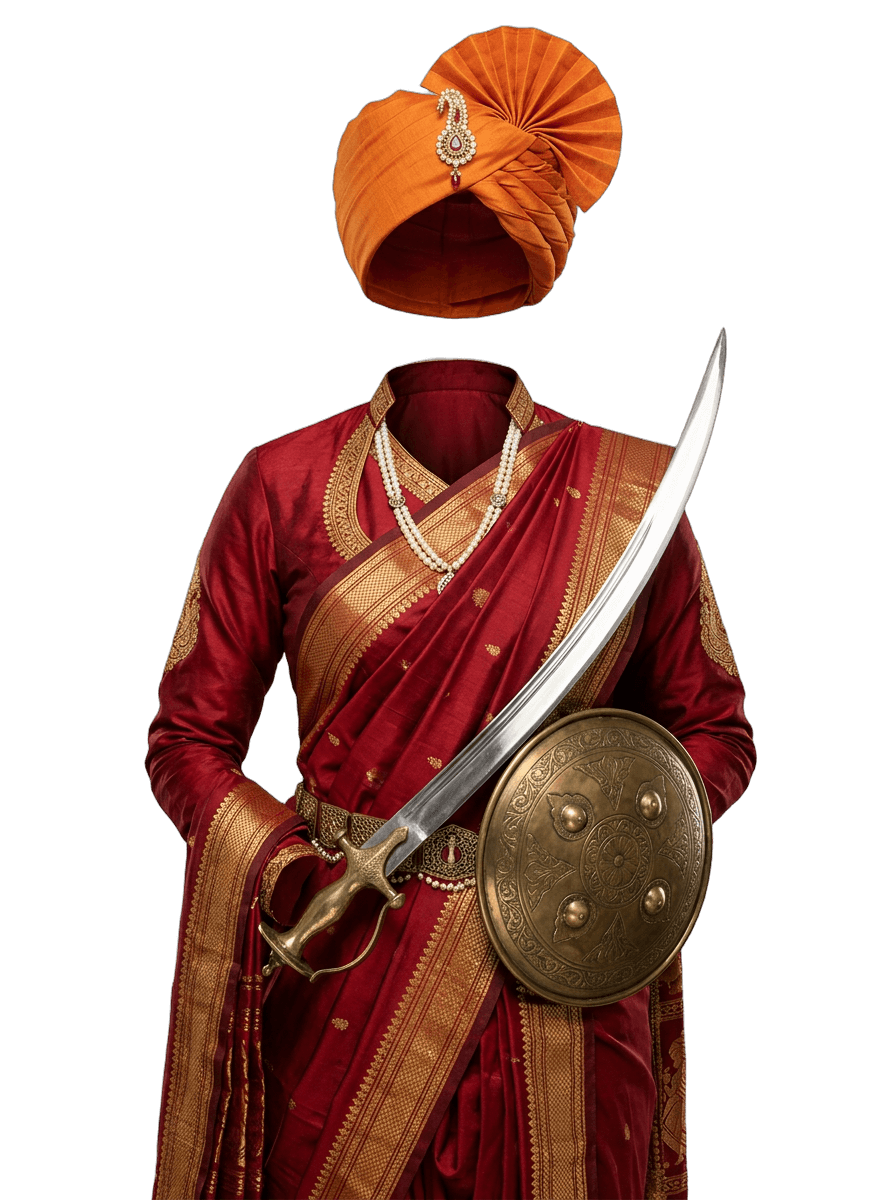
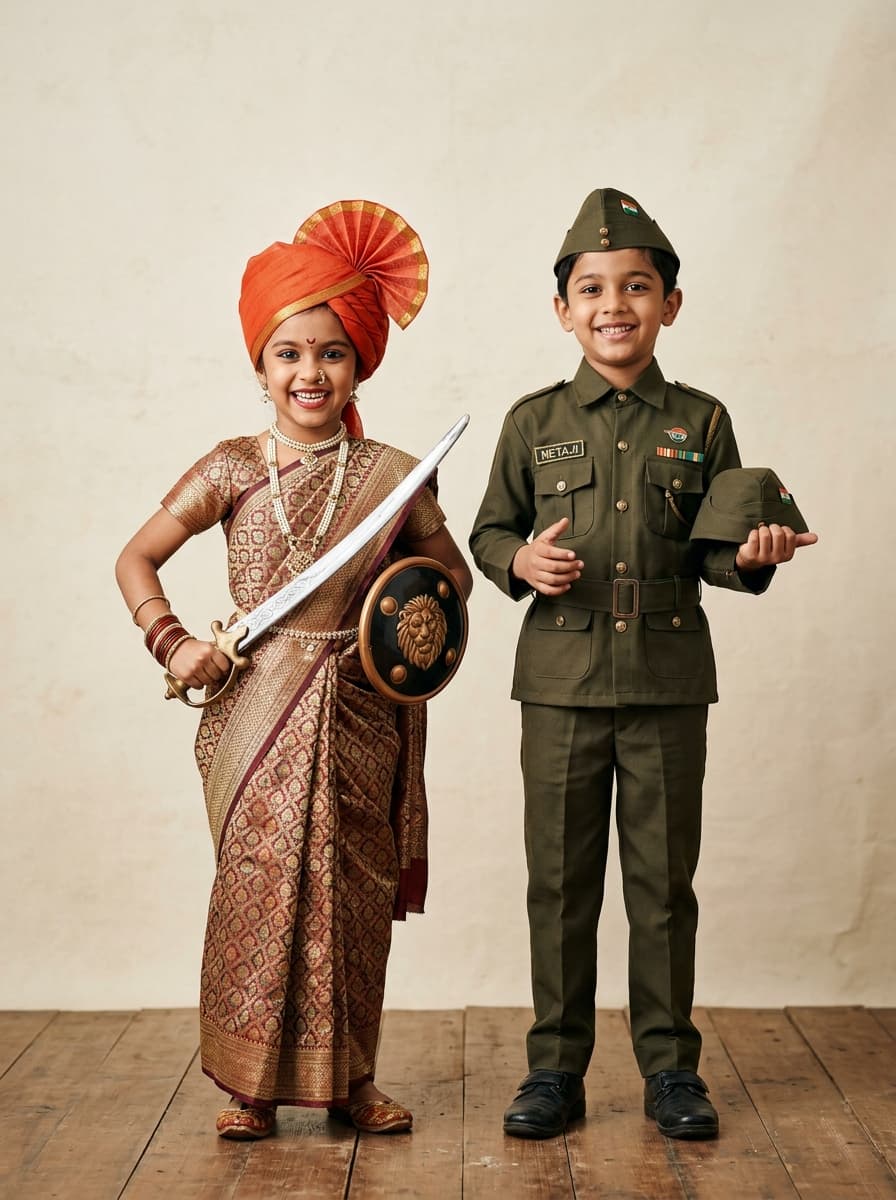
The Nauvari (nine-yard) saree draped dhoti-style, with traditional jewellery; dhoti, kurta and pheta for boys.
Bengal
The red-and-white bordered saree for girls, dhoti-kurta for boys.
Assam: Bihu
Mekhela chador for girls and dhoti with a gamosa for boys.
Rajasthan
Ghagra-choli with an odhni and bold jewellery for girls; angrakha, dhoti and a colourful safa for boys.
Chhattisgarh
For a programme in Bhilai, a Chhattisgarhi folk item is a natural choice. Traditional folk and tribal attire and festive regional sarees, with ornaments, give it an authentic look.
South India and Kashmir
Pattu pavadai, half-sarees and veshti for South Indian items; pheran with headgear for Kashmir.
Our traditional and regional rack covers Gujarati, Punjabi, Marathi, Bengali, Chhattisgarhi, Rajasthani, South Indian, Kashmiri and Bihu attire. Message us with the states and headcounts.